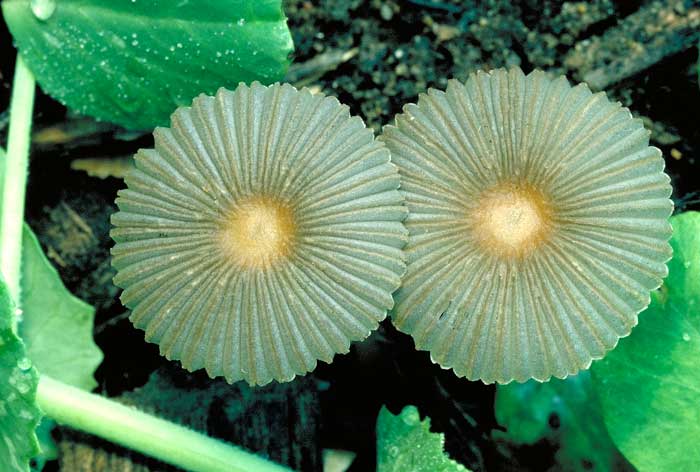

Mushrooms are as mysteriously unique as they are delicious. While often thought of as a vegetable and prepared like one, mushrooms are actually fungi, a special type of living organism that has no roots, leaves, flowers or seeds. While they can be cultivated, they easily grow wild in many regions of the world. Reference: http://www.whfoods.com/genpage.php?tname=foodspice&dbid=97#descr
Wednesday, October 20, 2010


Amanita muscaria (fly agaric)
One of the most iconic and distinctive of British fungi, fly agaric, with its red cap and white spots, is renowned for its toxicity and hallucinogenic properties.Species Information
- Scientific Name: Amanita muscaria (L.) Lam.
- Common name(s): fly agaric, fly mushroom
- Synonym(s): Agaricus imperialis, Agaricus nobilis, Amanitaria muscaria
- Conservation Status: Not considered to be of conservation concern. Widespread, and frequent to common throughout its range.
- Habitat: In woodland, or beside isolated trees. Ectomycorrhizal (forming a relationship with tree roots) especially with species of Betula (birch) and Pinus (pine), and occasionally with other tree species.
- Key Uses: Religious and recreational uses related to its hallucinogenic properties. Insect pest control. Medicinal uses. Forms a food source for some fly larvae.
- Known hazards: Contains small amounts of the toxin muscarine, which causes sweat-inducing poisoning. Also contains the alkaloids muscimol, ibotenic acid and muscazone, causing psychotropic poisoning, which may be severe in some cases, although deaths are very rare.
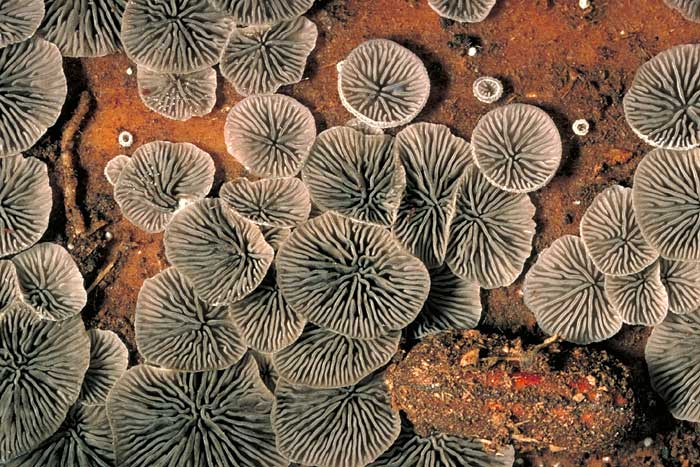
Resupinatus sp.
The photos show species of Crepidotus and Resupinatus . Both grow on dead wood and neither has a stem. In the former the cap is attached at it’s edge and in the latter the cap is attached by its top. The fruiting bodies of Campanella, like those of Resupinatus, are stem-less mushrooms that typically grow on the underside of dead wood lying on the ground. however, while Resupinatus has fairly standard gills, radiating from the point where the cap is attached tot he wood, Campanella is different. Here are two specimens, one brown and the other white , both collected on Norfolk Island. While each has a few radial gills, there are also numerous cross-connections between the gills.
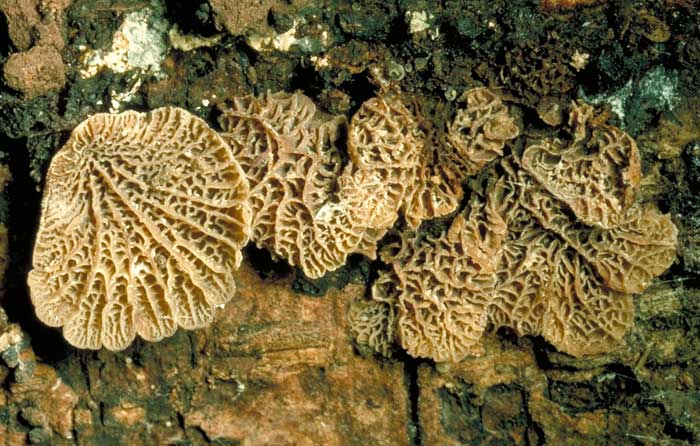
Campanella sp.

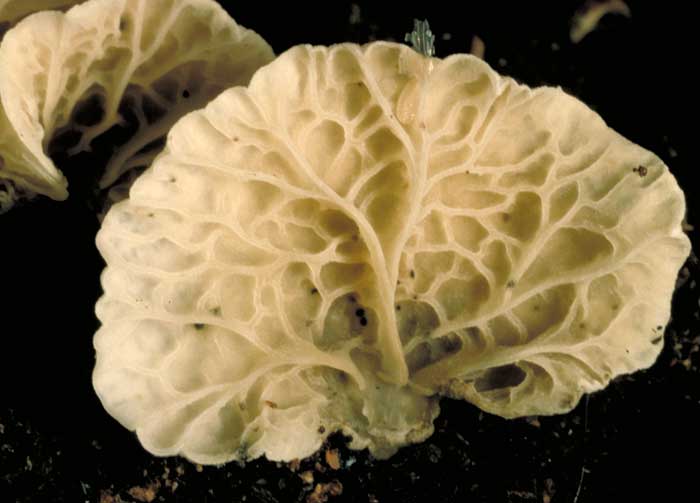
Campanella sp.
Tuesday, October 19, 2010
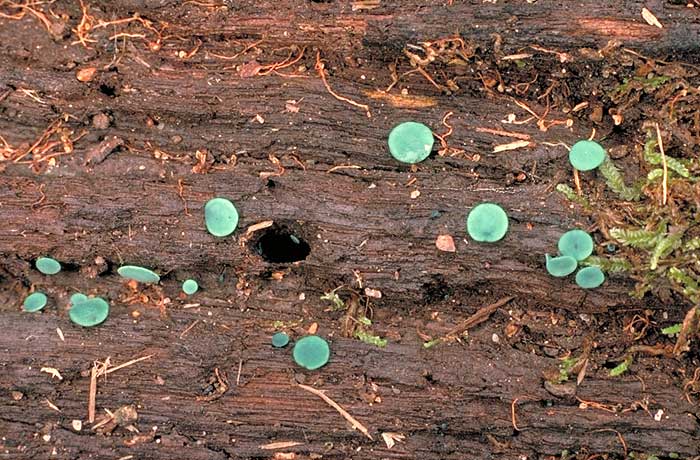
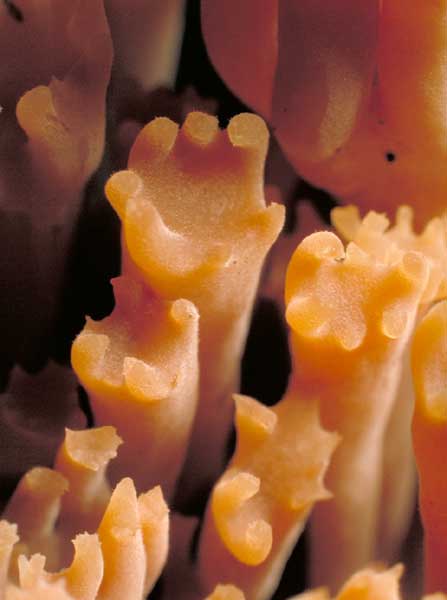
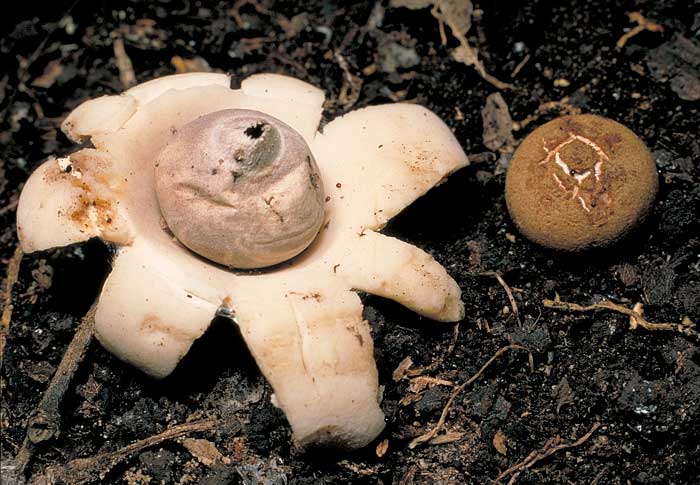
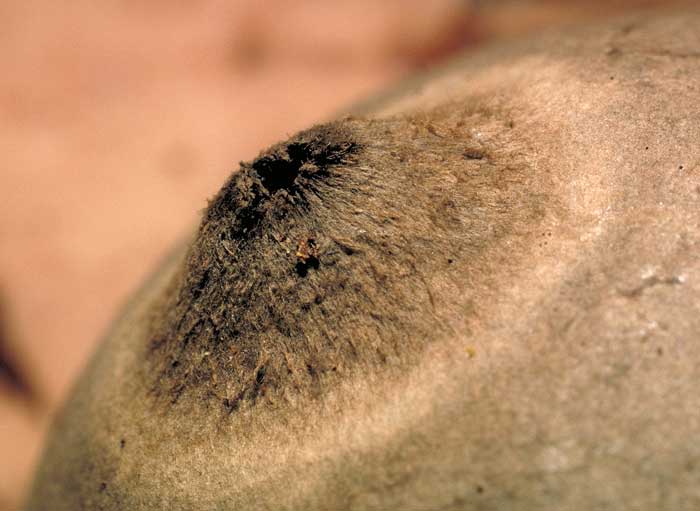
Geastrum sp. ostiole
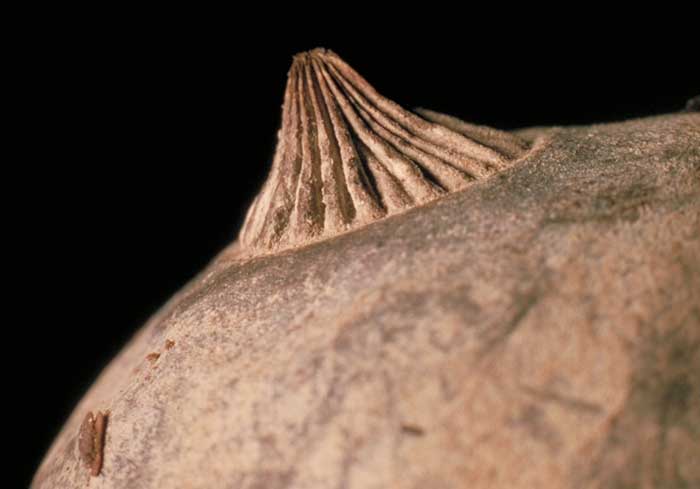
An Earthstar (the genus Geastrum ) looks like a puffball on a star-like base. The spore sack may sit directly on the star-like base or be raised on a short stalk. The apical opening through which the spores are released may be a fairly simple affair or more complex, such as the conical, pleated structure on Geastrum pectinatum .


Sunday, September 5, 2010


Subscribe to:
Posts (Atom)